

Soundscape
Temporary redecoration for the tunnel at The Hague Hollands Spoor
Client
The Hague Municipality
University Assignment
Duration
5 months
February - June 2022
Project Type
Group Project
5 Students, 5 Nationalities
My Role
UX Designer, Client Contact, Group organizer
Context
The station The Hague Hollands Spoor is the oldest train station in The Hague and has recently gone through some renovation. One of the biggest changes is the closed-off entrances leading to the pedestrian/cyclist’s tunnel underneath the station. Which caused the tunnel to lose one of its main purpose → getting to the train. Now, its purpose has changed to that of a passageway that connects the city center and the university campus. Because of that, problems of safety have started to appear. The Municipality of The Hague believes there must be a way that can solve these problems and ensure safe travels in and out of this tunnel for everyone.
Challenge
Design a temporary redecoration for the pedestrian/cyclists tunnel at The Hague Hollands Spoor, which is used by a wide range of different people every day.
Design Solution
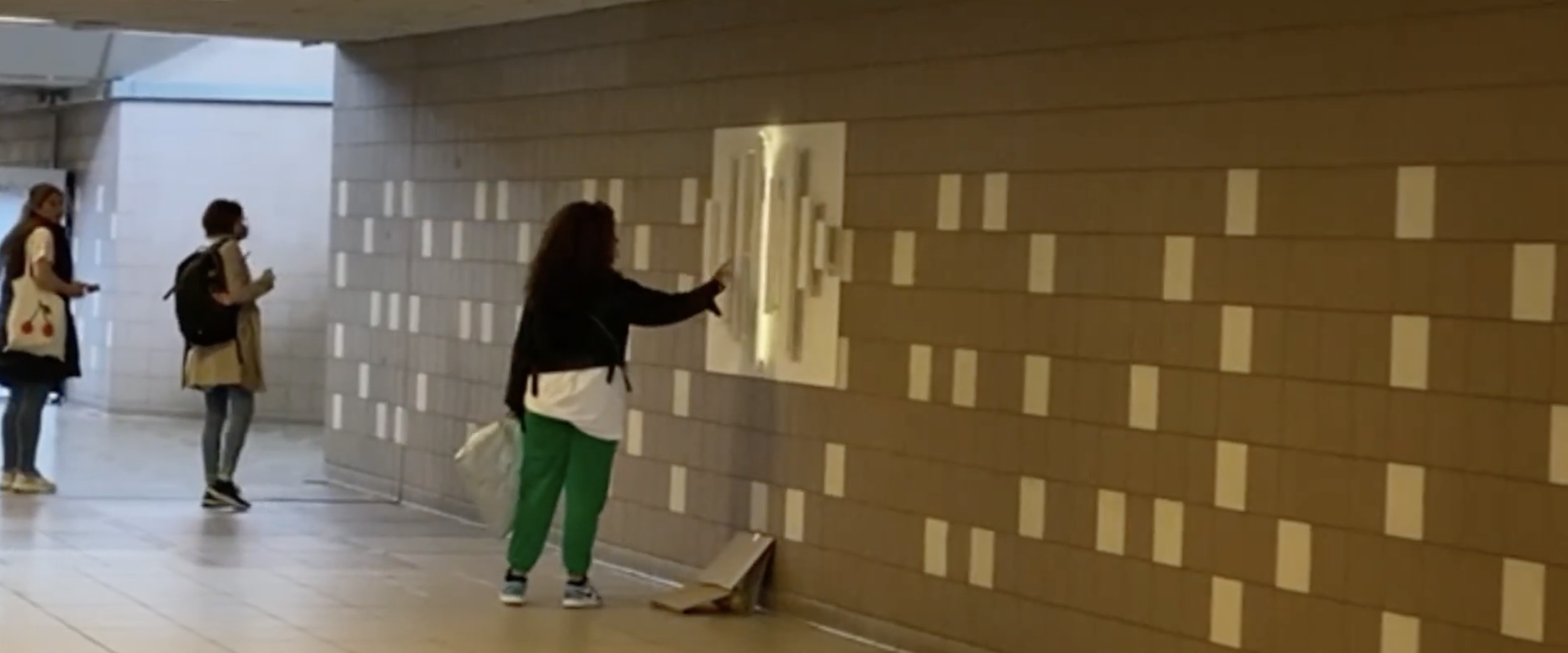
Soundscape was created for and with the tunnel and its passers. The soundscape is an artful music-making wall installation that invites passers to explore their surroundings and escape their busy lives for a moment. Passers can interact with the Soundscape actively and/or passively. They'll create a collective rhythm or vibe in the tunnel in both cases.
The Soundscape always works. It works through passive interaction such as walking, running, or biking past it. Or actively interact with the wooden panels of the Soundscape by hovering over it with their hand, elbow, or any other body part. Through that movement, motion sensors get triggered and create a sound from a handpan and light-up lights behind the board.
Research methods
Going into the user research study, we had to shift our view from a user to a researcher on the tunnel. Since the tunnel is right next to our university, we’ve all used this tunnel before. Therefore we needed to switch our perspective of the tunnel as a user to a designer. We approached the research of this project with an open mind, but not with an empty mind.
After meeting the client, and finding out what their expectations are, we decided to focus our research on three main topics: Feelings of the tunnel & users, the tunnel’s physical attributes, and the desires of the user.
As the tunnel was very close to our location, it was easy for us to conduct a lot of research in a short amount of time and on location. Besides observations, we did an empathy map with passers, to find out about their feelings and emotions in the immediate experience of the tunnel. We even came up with our own research method which we called “play the tunnel”, where we asked people to play “redesigning” the tunnel with us using different building blocks.
“We approached the research with an open mind, but not with an empty mind.”
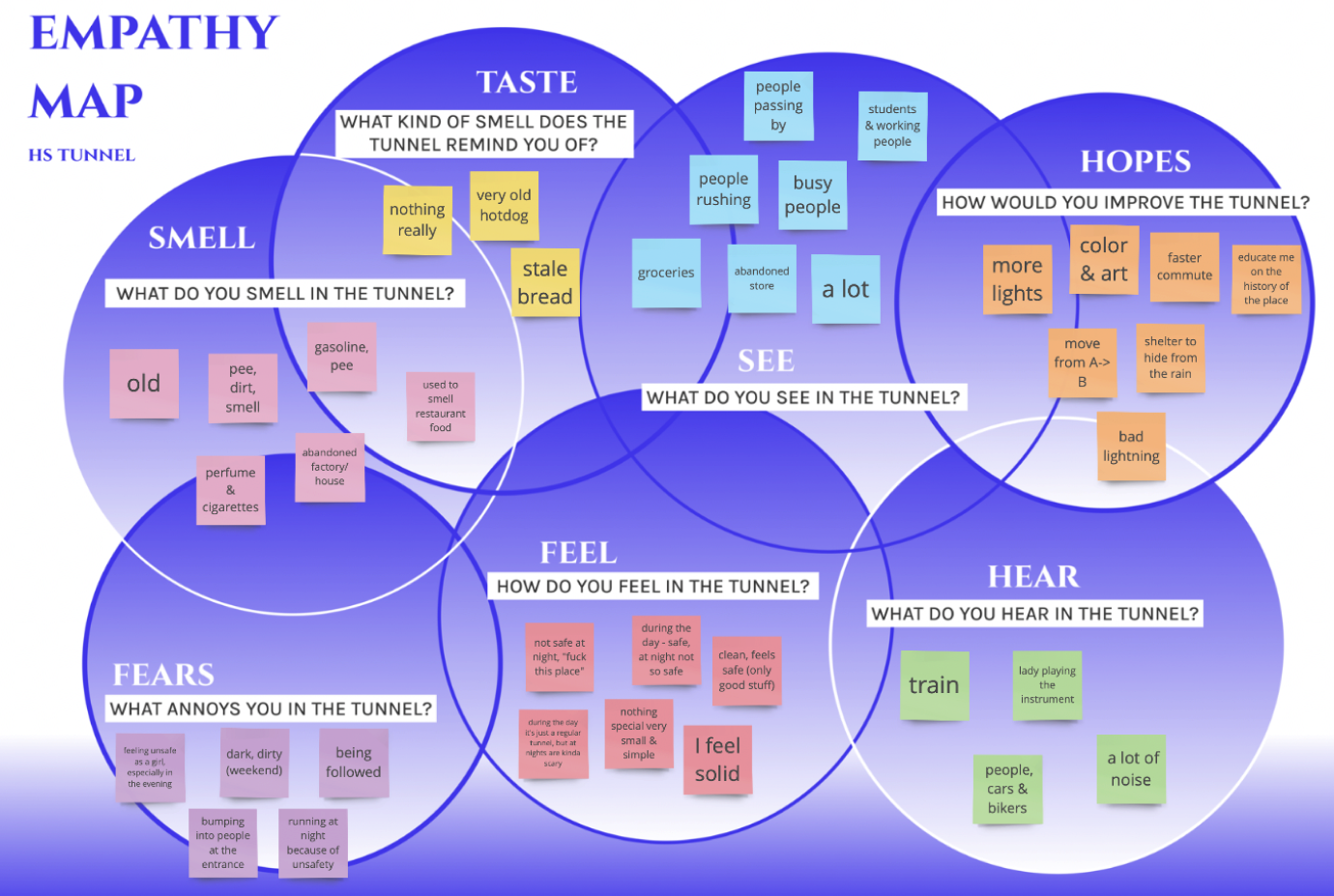
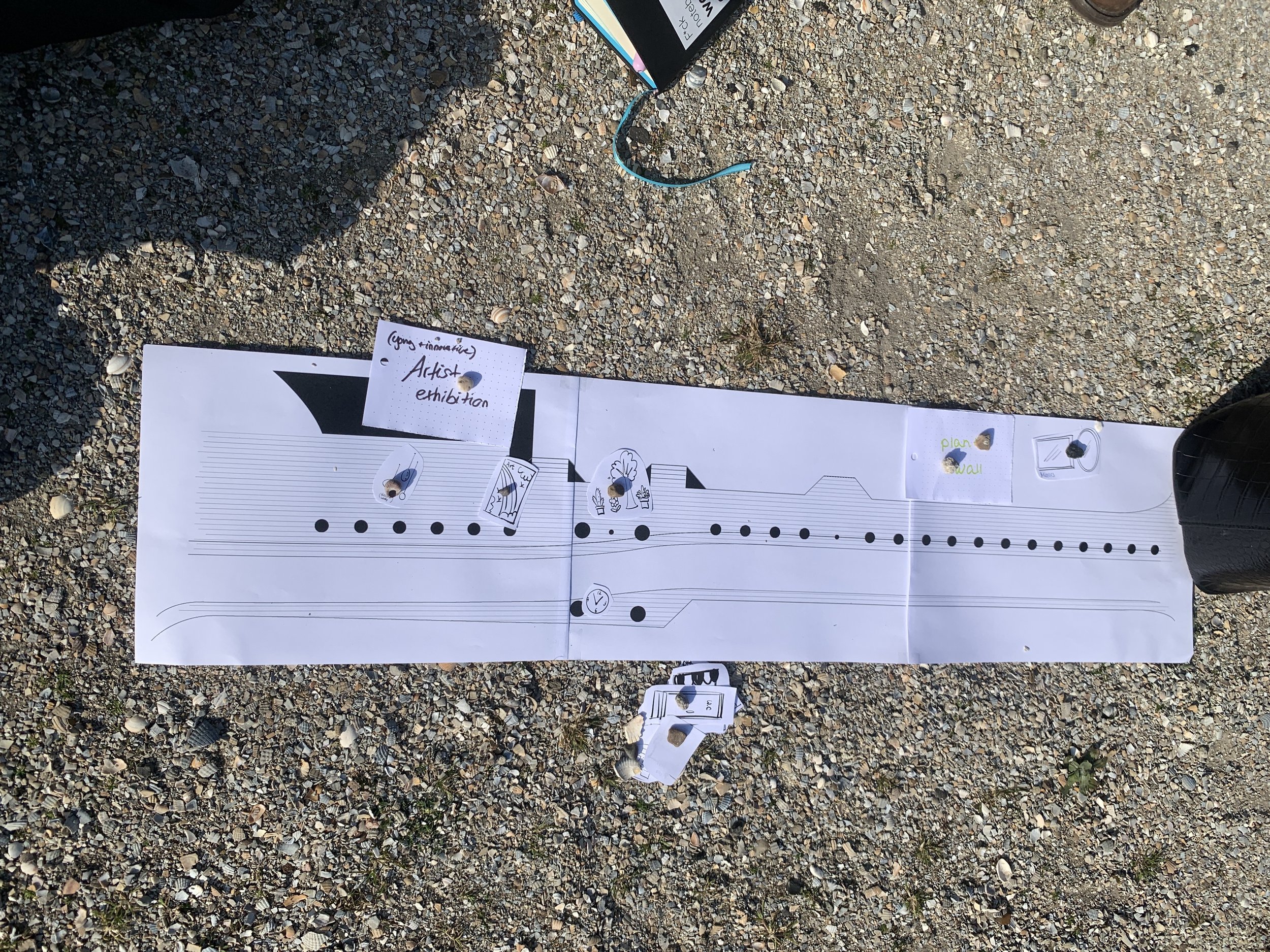
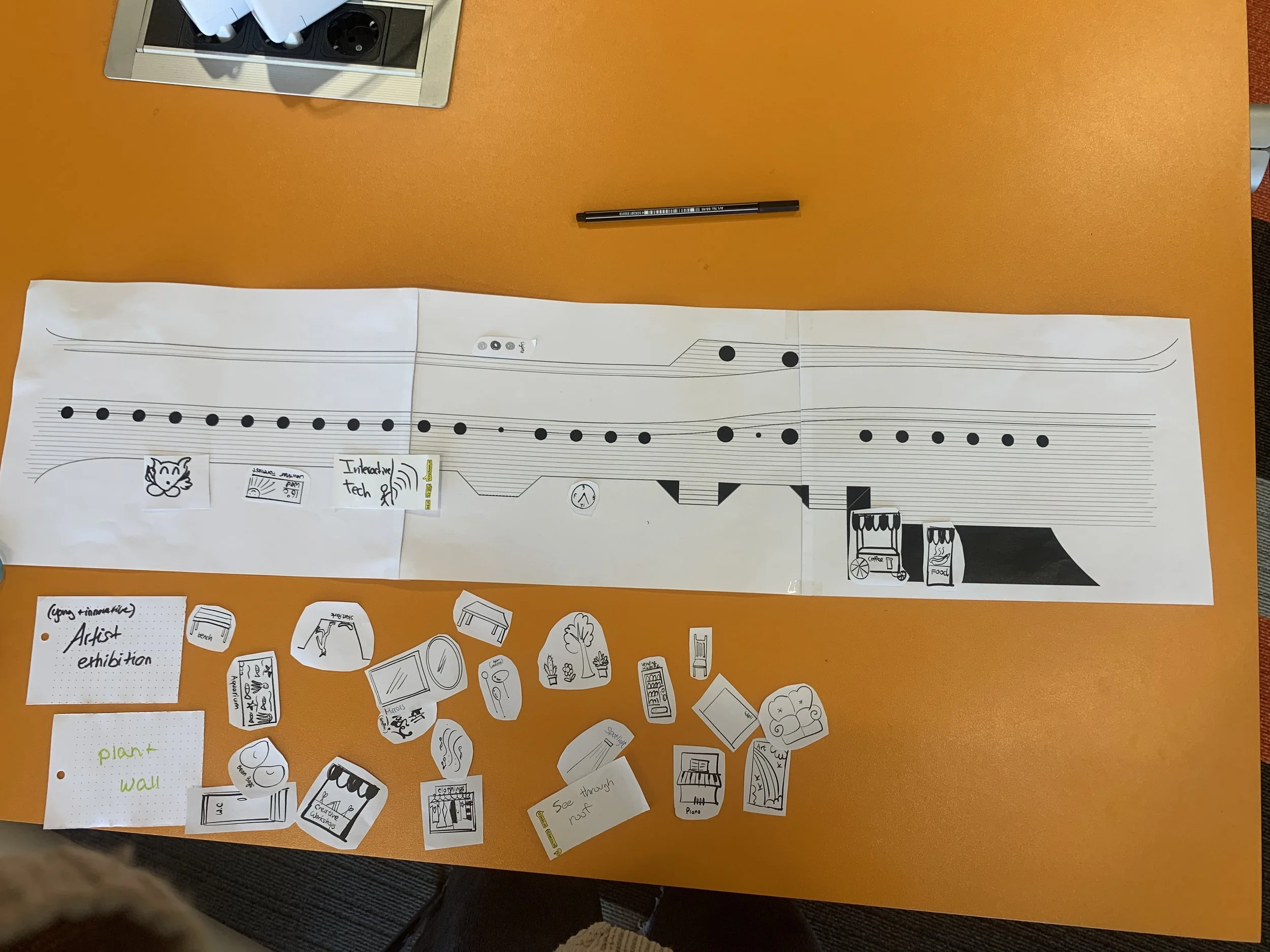
One of the main requirements for the municipality was to create a safer environment in the tunnel. We also did interviews in the form of storytelling with passers of the tunnel by asking them three questions:
In which situation did you feel the least safe in your life? Why?
In which situation did you feel the safest in your life? Why?
How would you define safety?
Our 3 U’s
Our key insights we learned through the research.
Unpredictability is a feeling of being unsafe
Unattractive visual and acoustics stimulants leading to discomfort
Underutilising of space
Design Vision
From our research, we noticed that the tunnel emits a feeling of disgust (dirty even though it is cleaned), an eerie sense of darkness and boredom (always assume the tunnel is dark and non-stimulating) as well as a common prejudice that the tunnel is tense and unsafe.
We want to design something that makes passers experience a sense of physical and emotional safety, so that those who are walking alone through the tunnel feel comfortable and entertained.
Ideating
We created How Might We (HMW) questions to help us brainstorm and eventually come up with 5 concepts per person. After brainstorming we had 25 concepts in total, now it was time to converge. We used dot-voting and discussed what three aspects of specific concepts would tackle the user’s needs. The result was three main topics - interaction, sound, and light. Out of each of these topics, we created one refined concept. This resulted in three concepts we presented to the municipality of The Hague.
Happy HS
Passersby can collaboratively create unique-looking patterns and get a fun & creative experience while getting from point A to point B - passing through the tunnel.
Soundscape
Reduce unwanted stimulants in the tunnel and use interactive sound technology to help user to experience a sense of connectedness among the self, others, and the city.
Lighter
Creating an emotionally safer feeling by making use of softer lights to create a lighter(less tense) feeling inside of the tunnel.
Finalizing concept
After having presented these three concepts to the client, we got very positive feedback on each one of them individually. But, the soundscape concept intrigued them the most. This was mostly because it felt the most novel. The main focus of this concept was sound rather than visuals. So, that is a different approach than how the problem of the tunnel would be tackled.
Prototyping
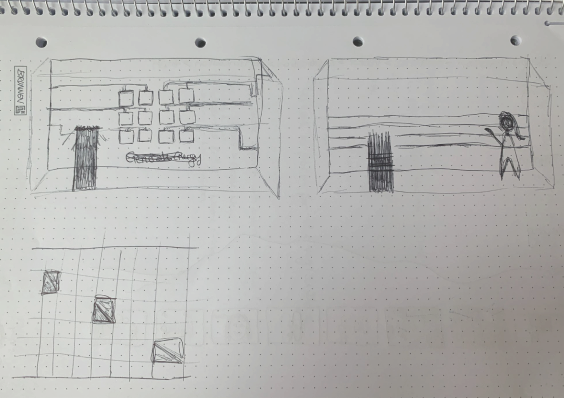
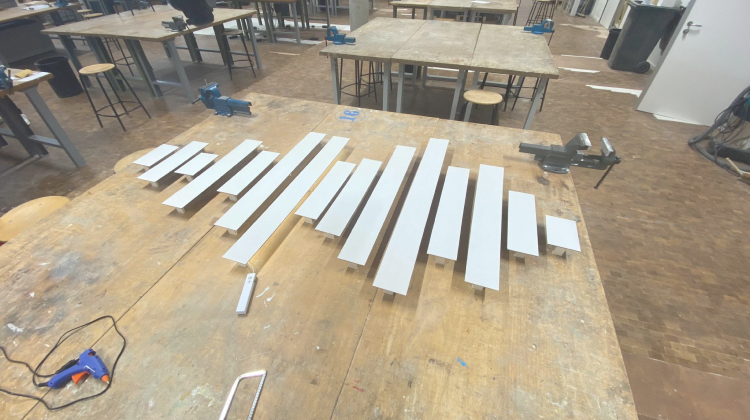
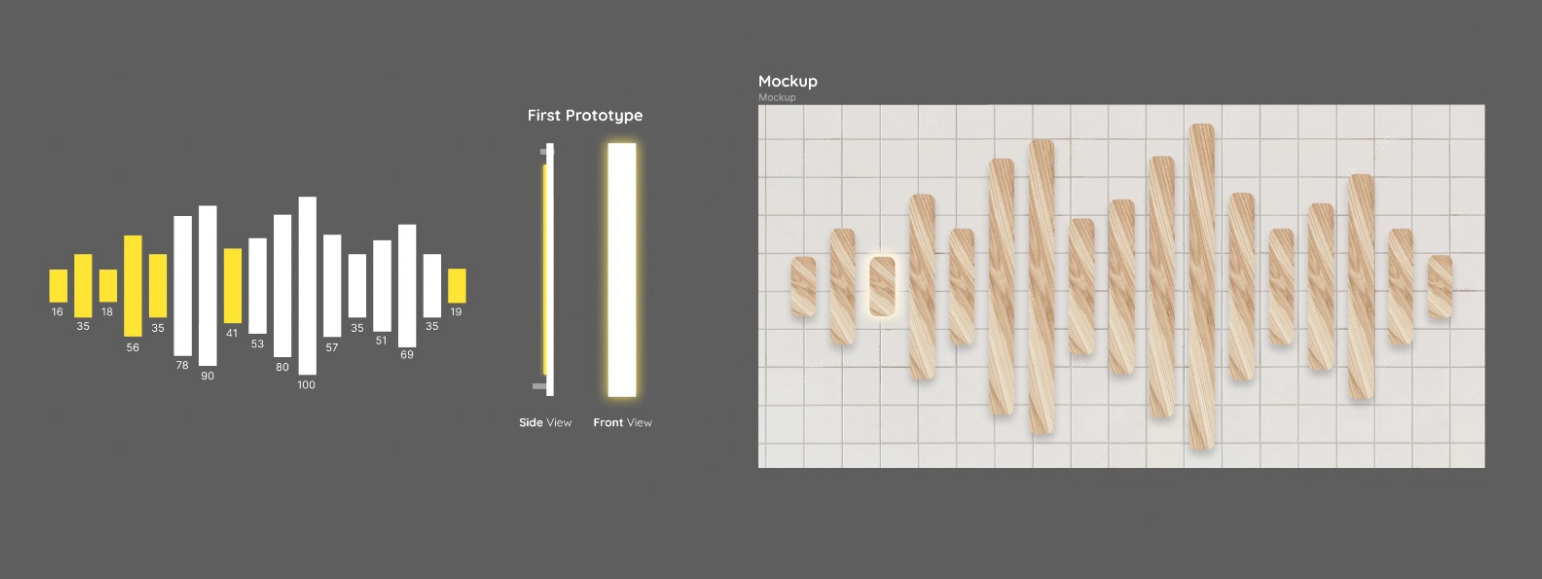
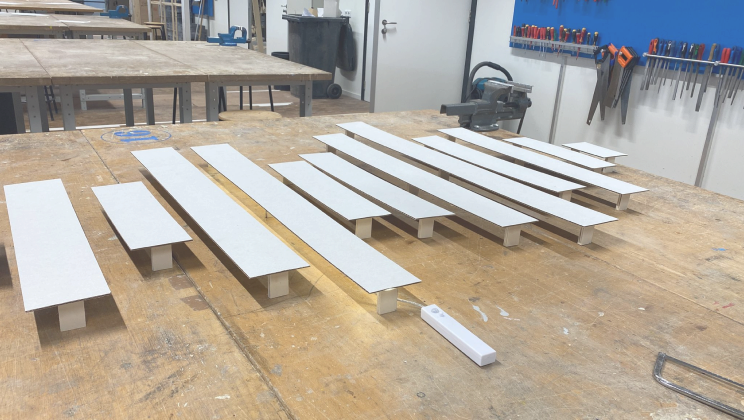
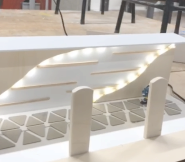
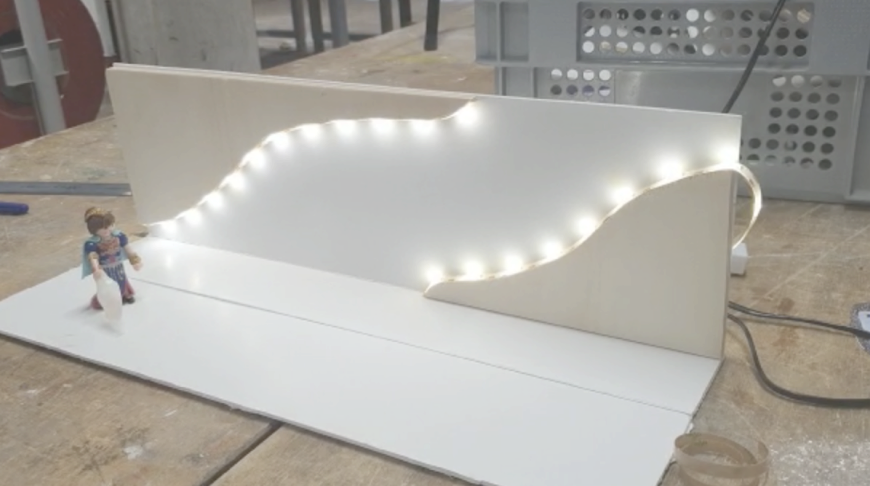
Since it became hard for us to explore in 2D, it was time for us to maybe start trying to make our first scale model of the tunnel. This helped us visualize it more and think in a more spatial manner. During the process of building this model, the idea of an interactive wall creating sounds and lighting up when people pass it started to form.
User testing
After getting clarity of our concept through the small-scale prototype we refined the design and interaction and create a bigger prototype, that we used for testing. We brought the prototype to the tunnel, to test it in the actual environment. Through the testing our main learnings were:
People didn’t initially understand that they could interact with the installation but got curious when they saw someone else interact with it before.
People are intrigued by the sound, but don’t immediately get triggered to interact with the installation.
People experienced the visual aspect to be pleasing and had fun interacting with it. Resulting in short conversations with each other.
“I really like it, I would like to have it at my home”
Final Design
Soundscape offers an interactive walking experience that makes bored passers who are performing a mundane routine feel fascinated and a sense of connectedness as they cross the tunnel, by letting them experience a living and breathing tunnel that responds to their speed and active participation.
Video
The video was part of our final deliverable. For the video, I created illustrations and acted out the main character. The first part of the video demonstrates the interaction with the installation, while the second part shows the raw footage of the user tests.